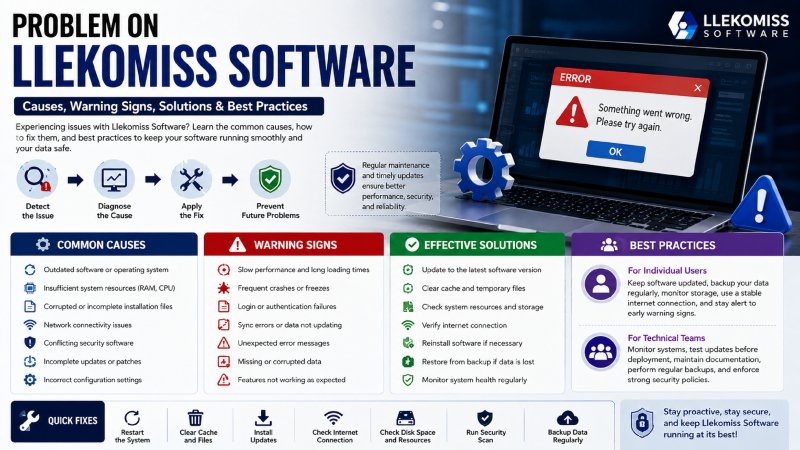
Software has become an essential part of modern business and personal productivity. From managing projects and storing information to automating daily tasks, digital tools help people work faster and more efficiently. However, when software begins to malfunction, productivity can quickly decline. This is why many users search for information about Problem on Llekomiss Software and the most effective ways to resolve it.
Understanding software issues is important because problems rarely appear without warning. Most technical disruptions develop gradually through outdated configurations, compatibility conflicts, insufficient resources, or maintenance neglect. By recognizing the causes early and applying the right solutions, users can reduce downtime and maintain a stable working environment.
This guide explores the common reasons behind software instability, the warning signs users should watch for, practical solutions, and proven best practices for both individual users and technical teams.
What Is Llekomiss Software?
Llekomiss Software is commonly associated with workflow management, data handling, digital collaboration, and operational efficiency. Like most modern software platforms, it depends on a combination of hardware performance, operating system compatibility, network connectivity, and proper configuration settings.
When these components work together correctly, the software can deliver a smooth user experience. When one or more elements become unstable, users may encounter performance problems, unexpected errors, or operational disruptions. Understanding these dependencies helps explain why software issues often have multiple contributing factors rather than a single cause.
Understanding the Context Behind Software Issues
The discussion surrounding Problem on Llekomiss Software reflects a broader challenge faced by many organizations and individual users. Modern applications are more complex than ever before. They communicate with cloud services, process large amounts of data, integrate with third-party systems, and operate across different devices and operating systems.
As software complexity increases, the possibility of technical conflicts also grows. A seemingly minor issue such as an incomplete update or a temporary network interruption can trigger larger operational problems. This is why troubleshooting should focus on identifying root causes rather than simply addressing visible symptoms.
Common Causes of Software Problems
Software failures often result from a combination of technical and environmental factors. One of the most common causes is outdated software. Developers regularly release updates to improve security, enhance performance, and correct known bugs. Systems running older versions may experience issues that have already been resolved in newer releases.
Hardware limitations also play an important role. Applications require processing power, memory, and storage capacity to perform efficiently. When a device lacks sufficient resources, users may experience slow response times, freezing, or unexpected crashes.
Warning Signs That Should Not Be Ignored
Most software problems provide early indicators before a major failure occurs. Recognizing these warning signs can help users take corrective action before productivity is affected.
A noticeable decline in performance is often the first indication of a developing issue. Applications may take longer to launch, commands may respond slowly, and routine tasks may require more processing time than usual. These symptoms frequently suggest resource limitations or software inefficiencies.
Information Table: Common Issues and Recommended Solutions
| Issue | Likely Cause | Recommended Action |
|---|---|---|
| Slow performance | Limited system resources | Close background processes and update software |
| Startup failure | Corrupted installation files | Perform a clean reinstallation |
| Login problems | Network or authentication issues | Verify connectivity and account settings |
| Sync failures | Cloud communication interruptions | Check internet stability and sync settings |
| Frequent crashes | Outdated software or system conflicts | Install updates and review system logs |
| Missing data | Storage or synchronization issues | Restore backups and verify data integrity |
Effective Solutions for Better Stability
Resolving software issues begins with a structured approach. The first step should always be ensuring that the software and operating system are fully updated. Updates frequently contain fixes that address known bugs and compatibility problems.
Clearing temporary files and cached data can also improve performance. Over time, accumulated files may consume system resources and affect application responsiveness. Removing unnecessary data often restores efficiency without requiring advanced technical intervention.
Users should also evaluate available storage space and system resources. Insufficient memory or limited disk capacity can significantly affect performance. Maintaining adequate free space allows applications to operate more efficiently and reduces the risk of instability.
When persistent issues continue despite basic troubleshooting, a complete reinstallation may be necessary. A clean installation replaces damaged files, removes problematic configurations, and restores the software to a stable state.
Pros and Cons of Current Troubleshooting Approaches
Pros of Modern Troubleshooting Methods
- Quickly resolves known software bugs and performance issues.
- Improves system security through regular updates and patches.
- Diagnostic tools help identify problems with greater accuracy.
- Preventive maintenance reduces the risk of future failures.
- Many issues can be fixed without hiring technical support.
- Enhances software stability and overall user experience.
- Saves time by addressing problems before they become critical.
- Helps maintain data integrity and system reliability.
- Reduces downtime and improves productivity.
- Provides long-term performance improvements when used consistently.
Cons of Modern Troubleshooting Methods
- Some issues are difficult to diagnose due to multiple underlying causes.
- Incorrect troubleshooting steps can create additional problems.
- Reinstalling software can be time-consuming and disruptive.
- Advanced issues may still require professional technical assistance.
- Certain fixes may temporarily affect existing settings or configurations.
- Users without backups risk losing important data during recovery.
- Troubleshooting complex software conflicts can require significant expertise.
- Not all problems are resolved through standard maintenance procedures.
- Frequent updates may occasionally introduce new compatibility issues.
- Extensive troubleshooting can consume valuable time and resources.
Best Practices for Individual Users
Individual users can significantly reduce the likelihood of encountering Problem on Llekomiss Software by adopting consistent maintenance habits. Keeping software updated should become a routine practice rather than an occasional task. Updates improve security, enhance performance, and address known vulnerabilities.
Creating regular backups is equally important. Reliable backups provide protection against data loss and simplify recovery when unexpected problems occur. Users should also monitor available storage space and maintain a stable internet connection when using cloud-based features.
Best Practices for Technical Teams
Technical teams face additional responsibilities because they support multiple users and systems simultaneously. Effective maintenance strategies should include continuous performance monitoring, scheduled software updates, and comprehensive documentation.
Testing updates before deployment can reduce compatibility risks and minimize operational interruptions. Technical teams should also establish backup procedures and recovery plans to ensure business continuity during unexpected incidents.
The Future of Software Reliability
Technology continues to evolve rapidly, and software maintenance practices are evolving with it. Artificial intelligence, predictive analytics, and automated diagnostics are becoming increasingly important in identifying potential issues before they affect users.
Future software platforms may be capable of detecting performance problems automatically, applying corrective actions in real time, and preventing failures before they occur. These innovations have the potential to reduce downtime, improve user experiences, and strengthen overall system reliability.
Frequently Asked Questions
What causes Problem on Llekomiss Software most frequently?
The most common causes include outdated software versions, insufficient system resources, corrupted installation files, network instability, and configuration conflicts.
Can a software update solve performance issues?
Yes. Updates often contain bug fixes, security improvements, and performance enhancements that can resolve many common issues.
Why does software suddenly start crashing?
Unexpected crashes may occur because of damaged files, hardware limitations, software conflicts, or compatibility problems introduced by outdated components.
Is reinstalling the software a good solution?
A clean reinstallation is often effective when corrupted files or configuration errors are responsible for ongoing issues.
How can users prevent future software problems?
Regular updates, routine backups, sufficient system resources, and proactive maintenance practices are the most effective preventive measures.
Conclusion
Understanding Problem on Llekomiss Software requires looking beyond individual errors and examining the broader factors that influence software performance and reliability. Most issues develop through a combination of outdated systems, resource limitations, network disruptions, and configuration challenges rather than a single technical fault.
Users who monitor warning signs, maintain regular updates, and follow established best practices are far more likely to enjoy a stable and productive experience. Whether you are managing software as an individual user or supporting an entire organization, taking preventive action today is the safest way to protect data, improve performance, and reduce the risk of future disruptions.