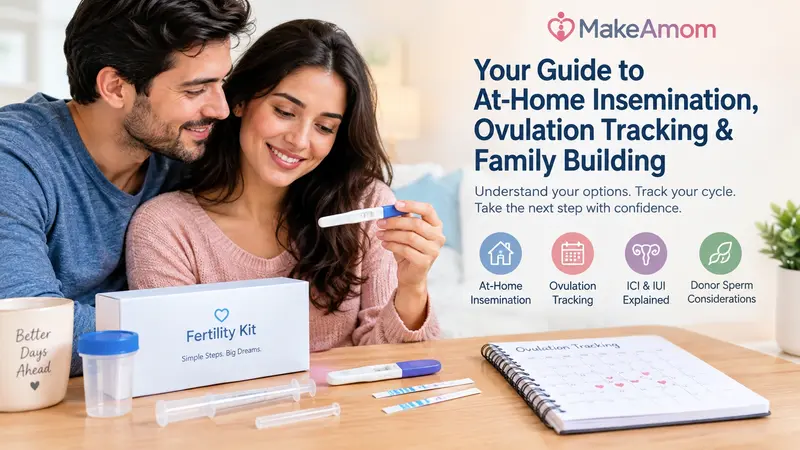
Starting a family can be an exciting experience, but it can also come with many questions. For some people, conception happens naturally without much planning. For others, understanding fertility, timing ovulation, choosing sperm, and learning about insemination options can become an important part of the journey.
This is where MakeAmom can be useful for people exploring family-building options. The platform provides information and resources related to fertility and at-home insemination, helping individuals and couples understand the choices available to them before deciding what may fit their situation.
At-home insemination can sound complicated at first. In reality, the basic idea is relatively simple: sperm is placed into the reproductive tract without sexual intercourse. However, there are important differences between at-home insemination and medical procedures performed by fertility professionals.
Understanding those differences matters. It can help you set realistic expectations, prepare properly, and know when professional medical advice may be appropriate.
What Is At-Home Insemination?
At-home insemination refers to attempts to place sperm into the vagina using a non-clinical method with the goal of achieving pregnancy.
Some people explore this option with sperm from a partner, while others may consider donor sperm. The process can appeal to people who prefer a private setting or want to explore conception outside a fertility clinic.
However, at-home insemination should not be confused with every type of assisted reproductive treatment.
For example, intrauterine insemination (IUI) is a medical procedure in which prepared sperm is placed directly inside the uterus. It is normally performed by a healthcare professional. At-home methods generally do not involve the same medical preparation or placement.
That distinction is important because the terminology can sometimes be used loosely online.
How At-Home Insemination Generally Works
The basic process involves collecting semen and using an appropriate applicator to place it into the vagina.
Products designed for this purpose may contain items such as
- A collection container
- A syringe or applicator
- Instructions
- Ovulation-related tools
- Other supplies depending on the product
The exact contents vary between kits.
The purpose of an at-home kit is usually to make the process more organized and easier to understand. It does not guarantee pregnancy, and using a kit does not remove the biological factors that affect conception.
Age, ovulation, sperm quality, reproductive health, and timing can all influence the chances of pregnancy.
Understanding ICI and IUI
Two terms that frequently appear in fertility discussions are intracervical insemination (ICI) and intrauterine insemination (IUI).
Although they sound similar, they are different procedures.
What Is ICI?
Intracervical insemination involves placing sperm near the cervix. It is sometimes discussed in connection with home insemination because the approach does not require sperm to be inserted directly into the uterus.
The sperm still has to travel through the reproductive tract to reach the egg.
What Is IUI?
IUI is a clinical fertility procedure. A healthcare professional places prepared sperm into the uterus using a thin catheter.
Because the sperm is placed beyond the cervix, IUI is different from typical home insemination.
IUI may be recommended in particular fertility situations, but whether it is appropriate depends on individual circumstances. A fertility professional can assess factors such as ovulation, sperm health, medical history, and previous attempts to conceive.
Why Ovulation Tracking Matters
Timing is one of the most important parts of trying to conceive.
An egg is available for fertilization for a limited period after ovulation, while sperm can survive for several days under favorable conditions. This is why identifying the fertile window can help people plan intercourse or insemination more effectively.
Ovulation does not necessarily occur on the same calendar day for everyone. It can also vary from cycle to cycle.
Instead of assuming that ovulation always happens on day 14, it is better to use fertility signs or testing when appropriate.
Common Ways to Track Ovulation
There are several ways people track their fertile window.
Ovulation Predictor Kits
Ovulation predictor kits detect changes in luteinizing hormone, often called LH. An LH surge can indicate that ovulation is approaching.
These tests are widely available and can provide a practical way to identify potentially fertile days.
However, an LH surge is not exactly the same thing as proof that ovulation has occurred. If cycles are irregular or there are concerns about ovulation, speaking with a healthcare professional can provide more useful information.
Cervical Mucus Changes
Cervical mucus naturally changes throughout the menstrual cycle.
Around the fertile period, some people notice mucus becoming clearer, wetter, and more slippery. Tracking these changes can provide another clue about fertility.
Basal Body Temperature
Basal body temperature tracking involves taking your temperature at a consistent time each morning and recording the results.
A sustained temperature rise can help identify that ovulation has already occurred. Because the change happens after ovulation, this method may be more useful for understanding cycle patterns over time than predicting the exact moment of ovulation in advance.
Combining Methods
Some people use more than one fertility-tracking method.
For example, an ovulation test can be combined with cycle tracking and observations of cervical mucus. Using multiple signs may provide a clearer picture than relying on a calendar alone.
Choosing the Right Time
Once the fertile window is identified, timing becomes an important consideration.
The goal is to have sperm available around the time an egg can be fertilized. For medically assisted donor insemination, research and professional guidance also emphasize the importance of timing insemination in relation to ovulation.
For home attempts, people should follow the instructions supplied with their chosen product and discuss timing with a healthcare professional if they are uncertain.
There is no single timing rule that works perfectly for everyone because menstrual cycles and ovulation patterns differ.
What Should You Look for in an At-Home Kit?
If you are considering an at-home insemination kit, look beyond attractive packaging or marketing claims.
Consider whether the product provides:
- Clear instructions
- Appropriate collection supplies
- Suitable application equipment
- Information about hygiene
- Transparent product details
- Reliable customer support
- Clear safety information
The kit should be easy to understand without making unrealistic promises about pregnancy.
A trustworthy fertility product should help users understand the process rather than suggesting that conception is guaranteed.
Hygiene Is an Important Part of the Process
Clean handling matters whenever reproductive materials and equipment are involved.
Before using a product, read the manufacturer’s instructions carefully. Wash your hands and use the equipment exactly as directed.
Do not improvise with household objects that were not designed for reproductive use.
If a product is intended for single use, do not reuse it unless the manufacturer specifically states that it can be safely reused.
Good hygiene is a basic step, but it should not be treated as a guarantee against infection or other complications.
Donor Sperm Requires Extra Consideration
Some people use donor sperm when trying to conceive at home. This can introduce additional medical, genetic, and legal considerations.
The American Society for Reproductive Medicine recommends appropriate screening and testing of sperm donors, including evaluation for infectious disease and genetic risks.
This is one reason using sperm from an established sperm bank or working with a qualified fertility provider can offer important safeguards.
Using sperm from a friend or another known donor may involve additional considerations. Medical screening is important, but legal parentage and donor status can also vary depending on the state and circumstances. ASRM notes that laws relating to non-medically assisted reproduction and donor arrangements can differ by state.
Anyone considering a known donor should therefore consider getting appropriate medical and legal advice before proceeding.
At-Home Insemination Is Not Right for Every Situation
At-home insemination may be an option some people explore, but it is not a solution for every fertility concern.
For example, if there is a known problem with ovulation, blocked fallopian tubes, severe sperm abnormalities, or another reproductive health issue, simply changing the insemination method may not address the underlying problem.
A fertility evaluation can help identify whether there is a medical reason that could affect conception.
This is especially important when someone has already tried to conceive without success.
When Should You Consider Talking to a Fertility Professional?
There is no need to feel that seeking medical advice means giving up on an at-home approach.
A fertility professional can help you understand your options and identify factors that may affect conception.
You may want to seek professional guidance if:
- Your periods are very irregular.
- You are unsure whether you ovulate.
- You have a known reproductive health condition.
- There are concerns about sperm quality.
- You have experienced repeated unsuccessful attempts.
- You are considering donor sperm.
- You have questions about medication or fertility treatment.
- You are worried about pain, bleeding, or other unusual symptoms.
Getting professional advice can help you make decisions based on your individual circumstances rather than relying entirely on general information online.
The Emotional Side of Trying to Conceive
Fertility journeys are not only physical. They can also be emotionally demanding.
Waiting for a pregnancy test, tracking cycles, managing expectations, and dealing with unsuccessful attempts can create stress.
Partners may also respond differently. One person may want to track every fertility sign, while another may prefer a more relaxed approach.
Open communication can make the process easier.
Instead of focusing only on the outcome, try to create a process that feels manageable. Take breaks from fertility-related conversations when needed, and do not blame yourself or your partner when pregnancy does not happen immediately.
Why Privacy Matters to Some People
One reason some individuals explore home-based options is privacy.
A clinical fertility setting can feel unfamiliar or stressful. Some people prefer to learn about their options privately and make decisions at their own pace.
At-home insemination can provide a more familiar environment, but privacy should not come at the expense of safety.
If donor sperm is involved, medical screening and legal considerations remain important even when the insemination takes place at home.
Common Misunderstandings About At-Home Insemination
Online fertility information can sometimes make conception sound much easier or more predictable than it really is.
Myth: A Kit Guarantees Pregnancy
No insemination kit can guarantee pregnancy.
A kit is simply a tool. Pregnancy depends on many biological factors.
Myth: ICI and IUI Are the Same
They are not.
ICI involves placing sperm near the cervix, while IUI is a medical procedure that places prepared sperm inside the uterus.
Myth: Ovulation Always Happens on Day 14
Not necessarily.
Cycle length varies between people and may also vary from month to month. Ovulation testing and other fertility signs can provide more useful information.
Myth: More Insemination Attempts Always Mean Better Results
More attempts do not automatically solve an underlying fertility issue.
If repeated attempts are unsuccessful, a medical evaluation may help identify potential causes and available options.
How MakeAmom Can Fit Into the Research Process
When researching fertility products and at-home insemination, it helps to start with education rather than immediately purchasing a product.
Resources such as MakeAmom can be used to compare available options and learn more about how different products are designed.
A comparison guide can be particularly useful when several products appear similar but contain different supplies or have different instructions.
Before choosing a product, consider your specific needs and read the manufacturer’s information carefully.
You can explore the MakeAmom comparison guide to learn more about available options.
Practical Tips for a More Organized Experience
A little preparation can make the process easier.
1. Understand Your Cycle
Keep a record of your periods and fertility signs. This can help you recognize patterns over time.
2. Read Instructions Before You Begin
Do not wait until the moment of use to open the instructions for the first time.
3. Prepare Everything in Advance
Have the required supplies ready so you are not searching for items during the process.
4. Follow Hygiene Instructions
Clean hands and properly handled equipment are important.
5. Avoid Unapproved Products
Do not use household objects or products that are not intended for reproductive use.
6. Keep Expectations Realistic
Even when timing is appropriate, pregnancy may not happen during a particular cycle.
7. Know When to Ask for Help
If you have concerns about fertility, donor safety, or repeated unsuccessful attempts, professional guidance can be valuable.
At-Home Insemination vs. Clinic-Based Treatment
It can help to understand the broad difference between home insemination and clinical fertility treatment.
| At-Home Insemination | Clinic-Based Treatment |
|---|---|
| Takes place outside a medical clinic | Performed with medical supervision |
| Often focuses on vaginal placement of sperm | May include IUI, IVF, or other treatments |
| Usually involves fewer medical procedures | Can involve testing, monitoring, and laboratory procedures |
| May offer more privacy | Provides access to clinical expertise |
| Does not address every fertility problem | Can investigate and treat certain fertility issues |
| May be less expensive in some circumstances | Costs vary depending on treatment |
Neither option is automatically appropriate for everyone. The right path depends on individual health, fertility factors, goals, and circumstances.
What If You Have Tried Several Times Without Success?
It can be tempting to keep trying the same method for many cycles. However, repeated unsuccessful attempts can be a reason to step back and evaluate the situation.
A healthcare professional may review menstrual history, ovulation, sperm health, reproductive anatomy, age, and other factors.
This does not mean that something is necessarily wrong. It simply provides more information.
Fertility care is highly individual, so advice that works for one person may not apply to another.
Building a Family Can Take Different Paths
There is no single family-building experience.
Some people conceive without medical assistance. Others use donor sperm, fertility medication, IUI, IVF, or other approaches. Some may move between different options as their circumstances change.
The important thing is to understand what each option involves before making a decision.
For people considering donor conception, the medical and legal sides deserve particular attention. ASRM guidance emphasizes donor screening and informed counseling, while state-specific legal rules may also affect donor arrangements.
Frequently Asked Questions
Can at-home insemination help someone become pregnant?
At-home insemination is one way some people attempt conception, but it does not guarantee pregnancy. Success depends on factors such as ovulation, sperm quality, reproductive health, timing, and age.
Is at-home insemination the same as IUI?
No. At-home insemination generally involves placing sperm into the vagina, while IUI is a clinical procedure in which prepared sperm is placed inside the uterus.
How can I identify my fertile window?
Ovulation predictor kits, cervical mucus observations, cycle tracking, and basal body temperature can all provide useful information. Combining methods may give a broader view of your cycle.
Can I use donor sperm for at-home insemination?
Some people consider donor sperm, but donor screening, infectious-disease testing, genetic considerations, and applicable laws are important. Requirements can vary depending on the type of donor arrangement and location.
Does using an insemination kit guarantee better chances?
No. A kit can provide equipment and instructions, but it cannot guarantee conception.
When should I speak with a fertility specialist?
Consider professional advice if you have irregular cycles, known reproductive concerns, questions about donor sperm, repeated unsuccessful attempts, or any other fertility-related concern that you cannot confidently address on your own.
Is fertility tracking useful even if my cycles seem regular?
It can be. Tracking can help you understand your individual cycle and identify patterns that may not be obvious from calendar dates alone.
Final Thoughts
Choosing a path toward parenthood is a personal decision, and having clear information can make that process easier.
At-home insemination may appeal to people who want a private and straightforward approach to trying to conceive. However, understanding the limits of the method is just as important as learning how it works.
Ovulation tracking can help with timing, while careful hygiene and appropriate equipment can make the process more organized. When donor sperm is involved, medical screening, genetic considerations, and applicable legal requirements deserve additional attention.
MakeAmom can be part of the research process by helping people explore fertility products and understand different at-home options. The most useful approach is to combine reliable educational resources with professional medical advice whenever individual circumstances require it.
Building a family can look different for everyone. What matters most is making informed choices, understanding the available options, and knowing when additional support can help.