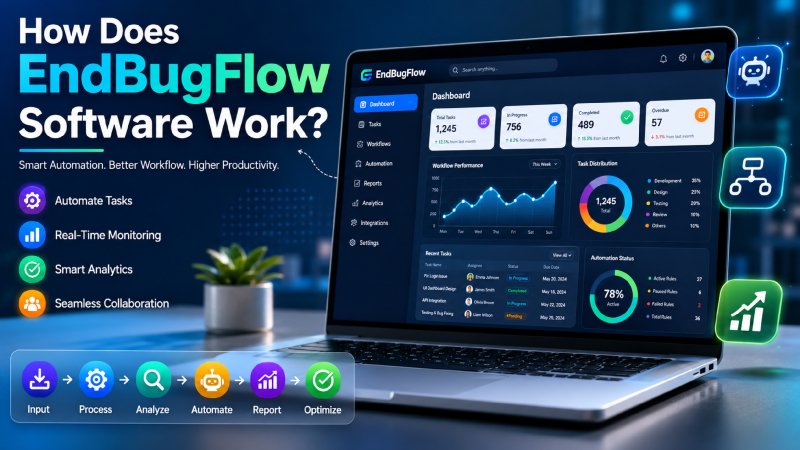
Modern businesses rely heavily on software solutions to improve efficiency, automate repetitive tasks, and manage complex workflows. As organizations continue to digitize their operations, the demand for smart workflow management tools has grown rapidly. One software name that has recently attracted attention is EndBugFlow. Many users are asking the same question: How does EndBugFlow software work? Understanding the answer can help businesses, developers, project managers, and teams determine whether this solution is suitable for their operational needs.
At its core, EndBugFlow is designed to streamline processes, improve workflow visibility, and automate tasks that would otherwise consume valuable time and resources. Instead of manually tracking activities and resolving workflow bottlenecks, users can rely on the software to organize information, monitor performance, and generate useful insights.
In this detailed guide, we will explore how does EndBugFlow software work, its major features, benefits, workflow structure, use cases, and practical applications. By the end of this article, you will have a clear understanding of how the platform functions and why it may be a valuable addition to your workflow management strategy.
What Is EndBugFlow Software?
EndBugFlow is a workflow-focused software solution that helps users manage tasks, automate processes, monitor performance, and improve operational efficiency. The platform is built around the concept of simplifying complex workflows and reducing manual intervention.
Rather than handling every process manually, organizations can use EndBugFlow to create structured workflows that guide activities from start to finish. This approach improves consistency, accuracy, and productivity.
The software is often used by:
- Business teams
- Project managers
- Development teams
- Operations departments
- Process improvement specialists
- Organizations seeking automation
Its flexible design allows it to support a variety of business environments where workflow management is essential.
Why EndBugFlow Is Becoming Popular
The growing popularity of EndBugFlow can be attributed to several factors.
First, businesses are constantly searching for ways to improve efficiency without increasing operational costs. EndBugFlow helps achieve this goal by automating repetitive processes.
Second, teams require better visibility into their workflows. Managers need to know where tasks stand, which projects require attention, and where delays are occurring.
Third, modern organizations generate large amounts of data. EndBugFlow helps organize this information and transform it into actionable insights.
These capabilities make the software appealing to businesses that want to optimize their operations and improve productivity.
How Does EndBugFlow Software Work?
To understand how EndBugFlow software works, it is helpful to break the system down into several key stages.
The software generally follows a workflow cycle that includes:
- Data Input
- Processing
- Analysis
- Monitoring
- Automation
- Reporting
- Optimization
Each stage plays an important role in ensuring smooth operations.
Step 1: Data Collection and Input
Every workflow begins with information.
Users enter data into the system through various methods, including:
- Manual entries
- Imported files
- Integrated applications
- Automated sources
- Workflow triggers
The software collects this information and stores it within a structured environment.
For example, a project management team might enter task details, deadlines, team assignments, and project milestones into EndBugFlow. The platform then organizes this information for further processing.
Proper data collection is critical because it serves as the foundation for all future workflow activities.
Step 2: Workflow Processing
After data enters the system, EndBugFlow begins processing it according to predefined rules and workflow structures.
This stage involves:
- Organizing information
- Categorizing tasks
- Assigning responsibilities
- Establishing priorities
- Defining workflow paths
The software follows the instructions established by administrators or managers.
For example, if a new support request enters the system, EndBugFlow may automatically assign it to the appropriate department based on predefined conditions.
This automated processing significantly reduces manual workload.
Step 3: Intelligent Analysis
One of the most valuable aspects of EndBugFlow is its ability to analyze workflow information.
The software continuously reviews:
- Task progress
- Completion rates
- Delays
- Resource allocation
- Performance indicators
By examining these factors, EndBugFlow helps identify potential inefficiencies before they become major problems.
Organizations can use this information to improve processes, allocate resources more effectively, and make better decisions.
Step 4: Monitoring and Tracking
Monitoring is an essential component of workflow management.
EndBugFlow provides real-time visibility into workflow activities, allowing users to track progress as tasks move through different stages.
Key monitoring capabilities include the following:
- Status tracking
- Workflow visualization
- Task progress updates
- Deadline monitoring
- Team performance observation
Managers gain a clear understanding of what is happening throughout the organization.
Instead of relying on manual updates, they can access live information whenever needed.
Core Features of EndBugFlow Software
The effectiveness of EndBugFlow is driven by a combination of powerful features designed to improve workflow management.
Workflow Automation
Automation is one of the software’s most valuable capabilities.
Rather than requiring employees to manually complete repetitive administrative tasks, EndBugFlow automates routine activities.
Examples include:
- Task assignments
- Approval requests
- Notifications
- Workflow transitions
- Status updates
Automation helps save time while reducing the likelihood of human error.
Real-Time Dashboard
The software includes a centralized dashboard that provides an overview of workflow activities.
Users can quickly view:
- Active projects
- Pending tasks
- Completed work
- Team performance
- Workflow statistics
This dashboard serves as a command center for workflow management.
Task Management
Task organization is another important feature.
EndBugFlow allows users to:
- Create tasks
- Assign responsibilities
- Set deadlines
- Monitor progress
- Track completion
This structured approach helps teams stay organized and productive.
Reporting and Analytics
The reporting system transforms workflow data into meaningful insights.
Reports can help organizations understand:
- Productivity levels
- Workflow efficiency
- Team performance
- Process bottlenecks
- Improvement opportunities
These insights support informed decision-making.
Integration Support
Modern organizations use multiple software platforms.
EndBugFlow can often work alongside existing systems, helping create a connected workflow environment.
This reduces duplication of effort and improves operational consistency.
EndBugFlow Workflow Explained
The workflow process can be simplified into a straightforward model:
Input → Processing → Analysis → Automation → Monitoring → Reporting → Optimization
Each stage contributes to overall workflow improvement.
Input
Information enters the system.
Processing
The software organizes and structures data.
Analysis
Workflow information is evaluated.
Automation
Actions are triggered automatically.
Monitoring
Activities are tracked in real time.
Reporting
Performance insights are generated.
Optimization
Organizations improve workflows based on collected data.
This continuous cycle helps businesses achieve long-term operational improvements.
Benefits of Using EndBugFlow Software
Organizations invest in workflow management solutions because they want to improve efficiency and reduce operational challenges. EndBugFlow offers several advantages that can help teams work smarter and achieve better results.
Saves Valuable Time
One of the biggest benefits of EndBugFlow software is time savings.
Many business processes involve repetitive activities such as assigning tasks, sending notifications, updating statuses, and tracking progress. Performing these tasks manually can consume a significant amount of time.
By automating these processes, EndBugFlow allows employees to focus on more important responsibilities instead of spending hours on routine administrative work.
As a result, projects move faster and productivity increases.
Reduces Human Errors
Manual workflows often lead to mistakes.
Missed deadlines, forgotten approvals, incorrect assignments, and incomplete updates can create serious problems for organizations.
EndBugFlow minimizes these risks by following predefined workflow rules. Automated actions ensure consistency and reduce the likelihood of errors caused by oversight or miscommunication.
This improves overall workflow accuracy and reliability.
Improves Team Collaboration
Successful projects depend on effective collaboration.
EndBugFlow creates a centralized environment where team members can view tasks, monitor progress, and stay informed about project developments.
Everyone has access to the same information, reducing confusion and improving communication across departments.
When teams work from a shared platform, collaboration becomes more efficient and transparent.
Increases Productivity
Productivity improves when employees spend less time managing workflows and more time completing meaningful work.
The software eliminates unnecessary manual tasks and streamlines project execution.
Teams can:
- Complete tasks faster
- Reduce delays
- Improve response times
- Maintain better organization
These improvements contribute directly to higher productivity levels.
Provides Better Visibility
Without proper monitoring tools, managers may struggle to understand the status of projects and workflows.
EndBugFlow provides visibility into every stage of the process.
Managers can quickly identify:
- Delayed tasks
- Resource shortages
- Workflow bottlenecks
- Performance issues
This visibility allows faster decision-making and more effective management.
Who Can Use EndBugFlow Software?
One of the strengths of EndBugFlow is its flexibility. The platform can support various industries and organizational structures.
Small Businesses
Small businesses often operate with limited resources.
EndBugFlow helps smaller teams automate routine tasks and improve workflow efficiency without requiring large administrative departments.
This allows growing businesses to scale operations more effectively.
Large Enterprises
Large organizations manage hundreds or even thousands of workflows simultaneously.
EndBugFlow helps coordinate these activities through centralized monitoring, automation, and reporting capabilities.
Enterprise teams benefit from improved consistency and operational control.
Project Managers
Project managers are responsible for ensuring tasks are completed on time and within scope.
EndBugFlow provides tools for:
- Task assignment
- Progress tracking
- Deadline management
- Team coordination
These features make project management more efficient.
Software Development Teams
Development teams often manage complex projects involving multiple contributors and stages.
EndBugFlow helps organize development workflows, monitor progress, and improve project visibility throughout the software lifecycle.
Operations Departments
Operations teams rely on efficient workflows to maintain business performance.
The software helps standardize processes and improve operational consistency across departments.
Common Use Cases of EndBugFlow Software
Understanding real-world applications helps explain how does EndBugFlow software work in practical situations.
Project Management
Many organizations use EndBugFlow to manage projects from initiation to completion.
The platform helps:
- Assign tasks
- Monitor deadlines
- Track milestones
- Coordinate teams
This structured approach improves project outcomes.
Workflow Automation
Businesses frequently automate repetitive processes using EndBugFlow.
Examples include:
- Approval workflows
- Document processing
- Employee onboarding
- Customer service requests
Automation reduces workload and increases efficiency.
Performance Monitoring
Organizations need accurate information about workflow performance.
EndBugFlow provides reporting and analytics tools that help managers evaluate the following:
- Productivity
- Efficiency
- Completion rates
- Resource utilization
These insights support continuous improvement efforts.
Task Tracking
Task tracking is essential for accountability.
The software allows managers and team members to monitor assignments, update progress, and verify completion status in real time.
Process Optimization
Many organizations use workflow software to identify inefficiencies.
EndBugFlow highlights bottlenecks and performance issues, helping businesses improve operational processes over time.
Advantages and Limitations of EndBugFlow Software
Like any software solution, EndBugFlow offers both strengths and challenges.
Advantages
Easy Workflow Management
The software simplifies complex workflows and makes them easier to manage.
Automation Capabilities
Automation reduces repetitive work and improves efficiency.
Improved Visibility
Managers gain better insight into workflow performance.
Scalability
The platform can support organizations of different sizes.
Enhanced Collaboration
Teams work more effectively through centralized communication and task management.
Data-Driven Insights
Reporting tools help organizations make informed decisions.
Potential Limitations
Learning Curve
New users may require time to understand advanced workflow configurations.
Initial Setup Requirements
Organizations must invest time in creating workflows and defining automation rules.
Dependence on Accurate Data
Workflow quality depends heavily on the accuracy of the information entered into the system.
Process Adjustment Period
Teams may need time to adapt to new workflow structures and automated processes.
Despite these challenges, most organizations find that the long-term benefits outweigh the initial learning and setup requirements.
Tips for Getting the Best Results From EndBugFlow
To maximize the value of EndBugFlow software, organizations should follow several best practices.
Define Clear Workflows
Well-structured workflows produce better results.
Organizations should clearly identify:
- Workflow stages
- Responsibilities
- Approval requirements
- Automation triggers
Train Team Members
Proper training helps users understand how to use the platform effectively.
Training reduces confusion and improves adoption rates.
Monitor Performance Regularly
Reports and analytics should be reviewed frequently.
Regular monitoring helps identify opportunities for improvement.
Update Workflow Rules
Business requirements change over time.
Organizations should periodically review workflow configurations and update them when necessary.
Leverage Automation Carefully
Automation works best when processes are clearly defined.
Businesses should automate repetitive tasks while maintaining appropriate oversight for critical decisions.
Is EndBugFlow Software Worth Using?
For organizations seeking greater efficiency, workflow visibility, and automation, EndBugFlow can be a valuable solution.
The software combines task management, workflow automation, monitoring, reporting, and analytics into a single platform.
Its ability to reduce manual effort, improve collaboration, and provide actionable insights makes it attractive for businesses of all sizes.
Whether managing projects, tracking tasks, automating approvals, or optimizing operational processes, EndBugFlow provides tools that help organizations work more effectively.
Companies that invest time in proper setup and workflow design can often achieve significant improvements in productivity and operational performance.
Frequently Asked Questions
What does EndBugFlow software do?
EndBugFlow helps organizations manage workflows, automate tasks, monitor performance, and improve operational efficiency through structured process management.
How does EndBugFlow software work?
The software collects data, processes information, analyzes workflow activities, automates actions, monitors progress, and generates reports that help organizations improve performance.
Is EndBugFlow suitable for beginners?
Yes. While advanced features may require some learning, the platform is designed to help users manage workflows efficiently regardless of experience level.
Can EndBugFlow automate repetitive tasks?
Yes. Automation is one of its core capabilities. Users can automate assignments, notifications, approvals, status updates, and workflow transitions.
What industries can use EndBugFlow?
The software can support businesses across various industries, including technology, operations, project management, customer service, administration, and process management.
Does EndBugFlow improve productivity?
Yes. By reducing manual work and streamlining workflows, EndBugFlow can help teams complete tasks more efficiently.
Is EndBugFlow useful for project management?
Absolutely. The software provides task tracking, deadline management, workflow monitoring, and reporting tools that support successful project execution.
What are the main features of EndBugFlow?
Key features include workflow automation, task management, reporting, analytics, monitoring, dashboards, and workflow optimization tools.
Conclusion
If you have been wondering how does EndBugFlow software work, the answer lies in its ability to streamline workflows through automation, monitoring, analysis, and reporting.
The platform helps organizations move beyond manual processes by creating structured workflows that improve efficiency and visibility. From task assignment and progress tracking to automation and performance reporting, EndBugFlow supports every stage of workflow management.
As businesses continue to focus on productivity and operational excellence, solutions like EndBugFlow can play an important role in helping teams work smarter, reduce errors, and achieve better results. Whether you operate a small business or manage large-scale enterprise workflows, understanding how does EndBugFlow software work can help you determine whether it is the right solution for your organizational needs.